Elopement guide
How to Elope in Costa Rica
A photographer’s guide
Elope in Costa Rica without the guesswork
If you want to elope in Costa Rica, you have more choices than almost anywhere on earth: a waterfall before breakfast, a volcano at your back, a beach at golden hour, a jungle villa for two. The hard part is not finding a beautiful spot. It is knowing which one fits you, when to go, and how to build a day that does not feel rushed.
We are Adri and Lucas, a photo and film team in Costa Rica. We have photographed elopements and small weddings across the country, and this guide is what we tell couples on our planning calls: what works, what to skip, and what the jungle will do whether you plan for it or not.
Read it in order or jump to the part you need. If you would like help with your own plans, our Costa Rica elopement photographer page shows how we work, and you can always check your date with us.
The short version
01.
Pick the landscape
WATERFALL, VOLCANO OR BEACH
Waterfalls and rainforest feel adventurous and private. Beaches are easy and golden at sunset. Many couples combine two, on two days.
02.
Pick the month, then plan for rain
DRY SEASON IS EASIEST
December to April is the easiest window, and February and March are great for waterfalls. Any other month can work with an early start and a rain plan.
03.
Pick the timeline
3 TO 4 HOURS FOR TWO PEOPLE
Three to four hours of coverage is the sweet spot for a couple on their own: time for getting ready, a first look, portraits and vows with no clock-watching.
Locations
Where to elope in Costa Rica
Waterfalls: Nauyaca and La Fortuna
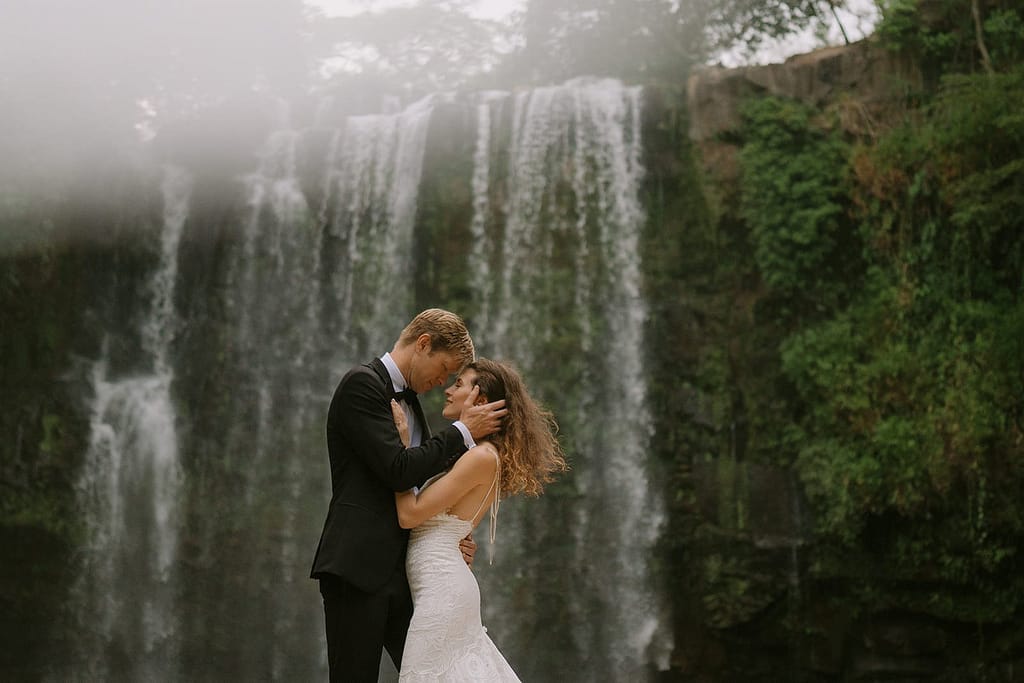
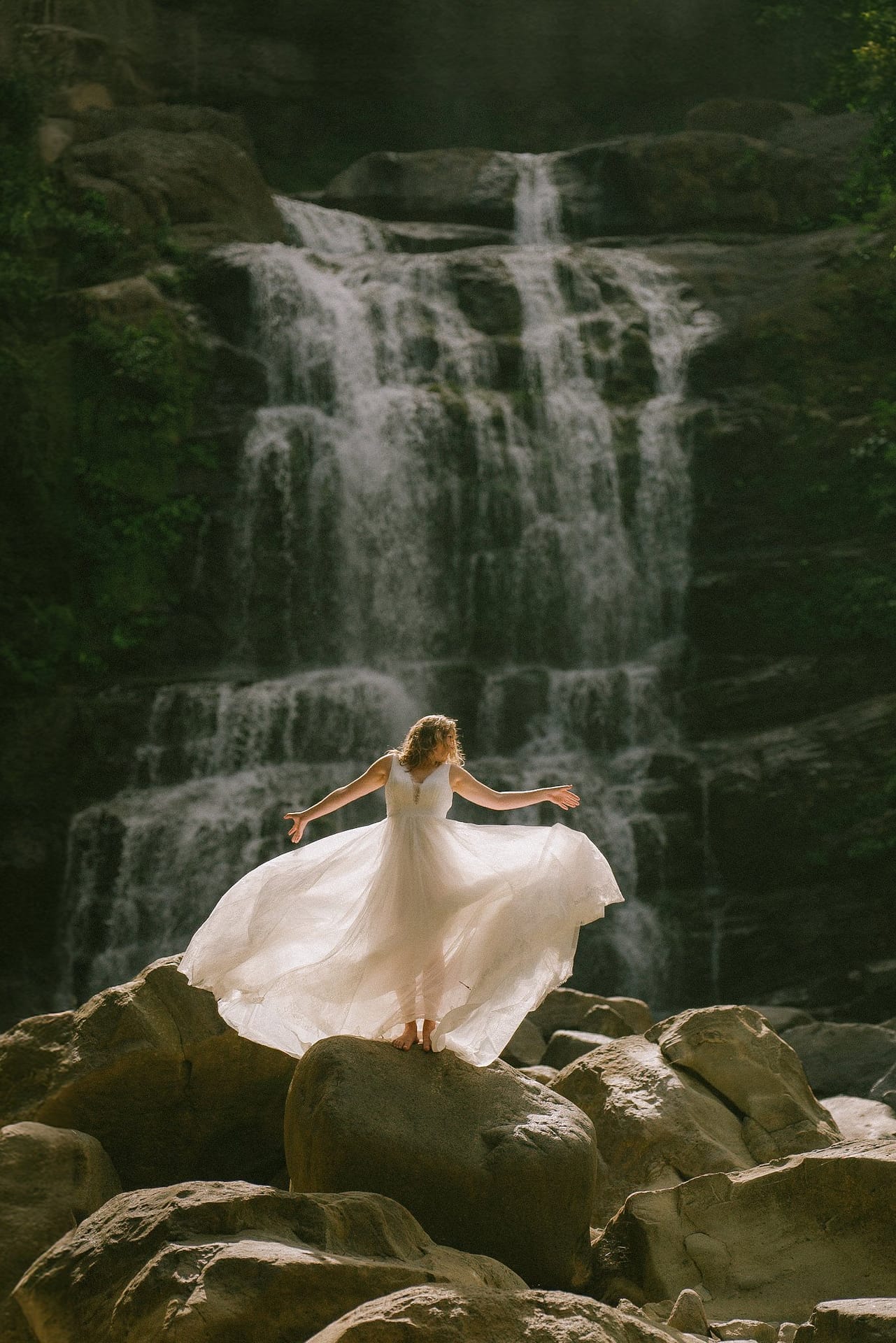
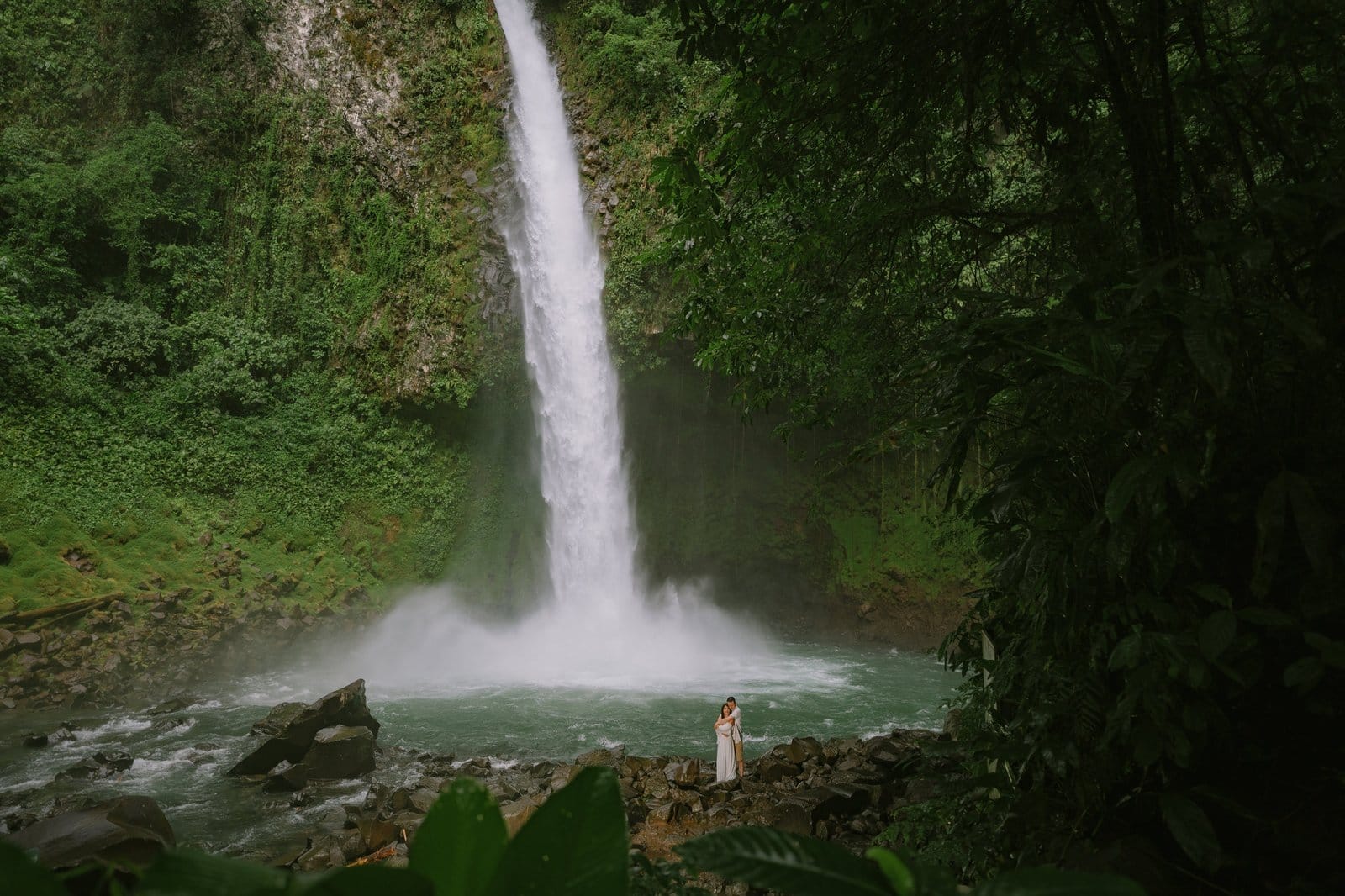
A waterfall gives you drama and privacy at the same time, if you go early. The big one for us is Nauyaca in the south Pacific, near Uvita and Dominical: a huge two-tier fall that looks enormous behind you, in a jungle setting where few couples elope. We coordinate early access and transport with the operator, so you do not have to. Near La Fortuna the famous waterfall is beautiful but public, busy and slippery, so we suggest arriving when it opens and choosing shoes you can walk in.
Volcano and rainforest: La Fortuna and Arenal
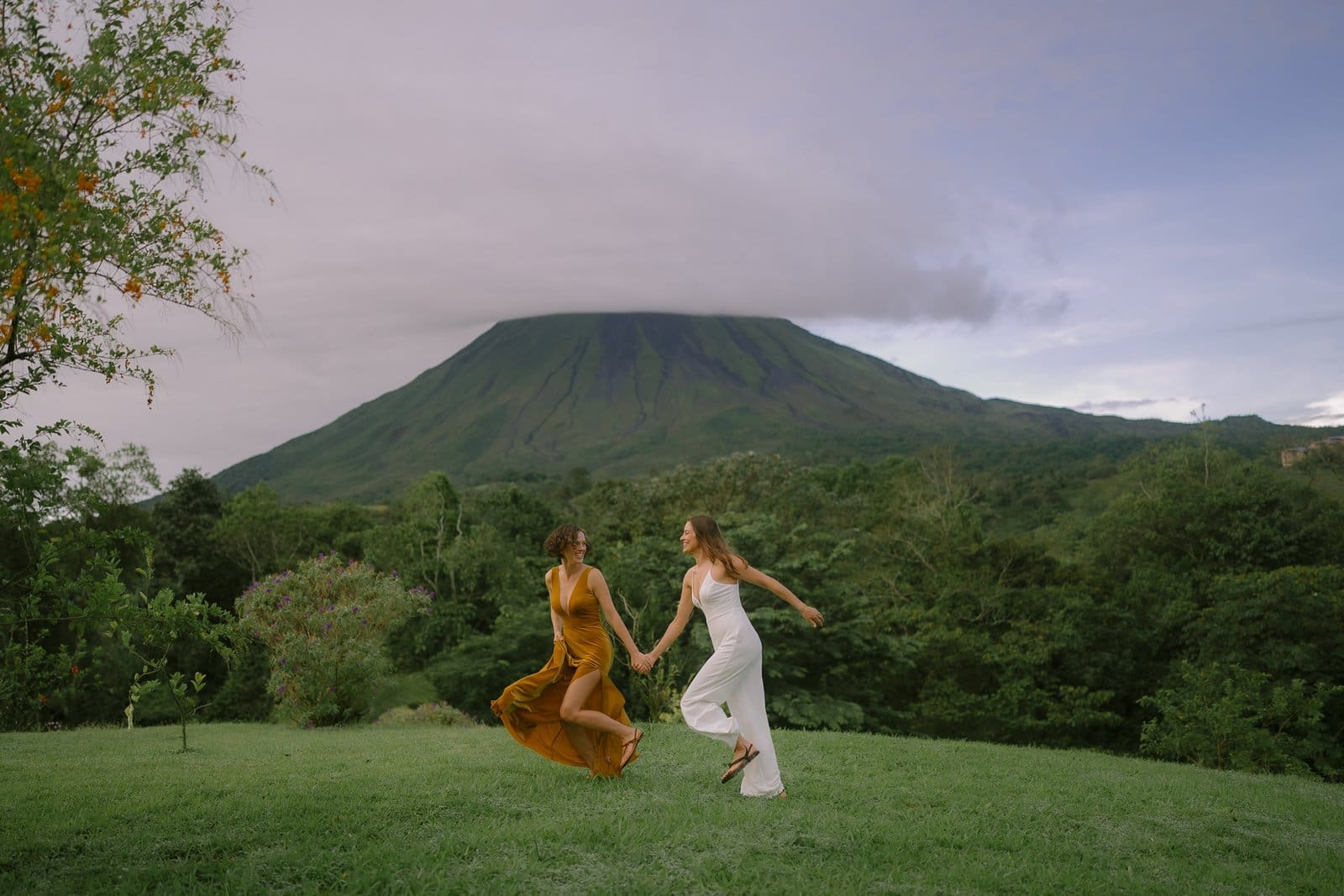
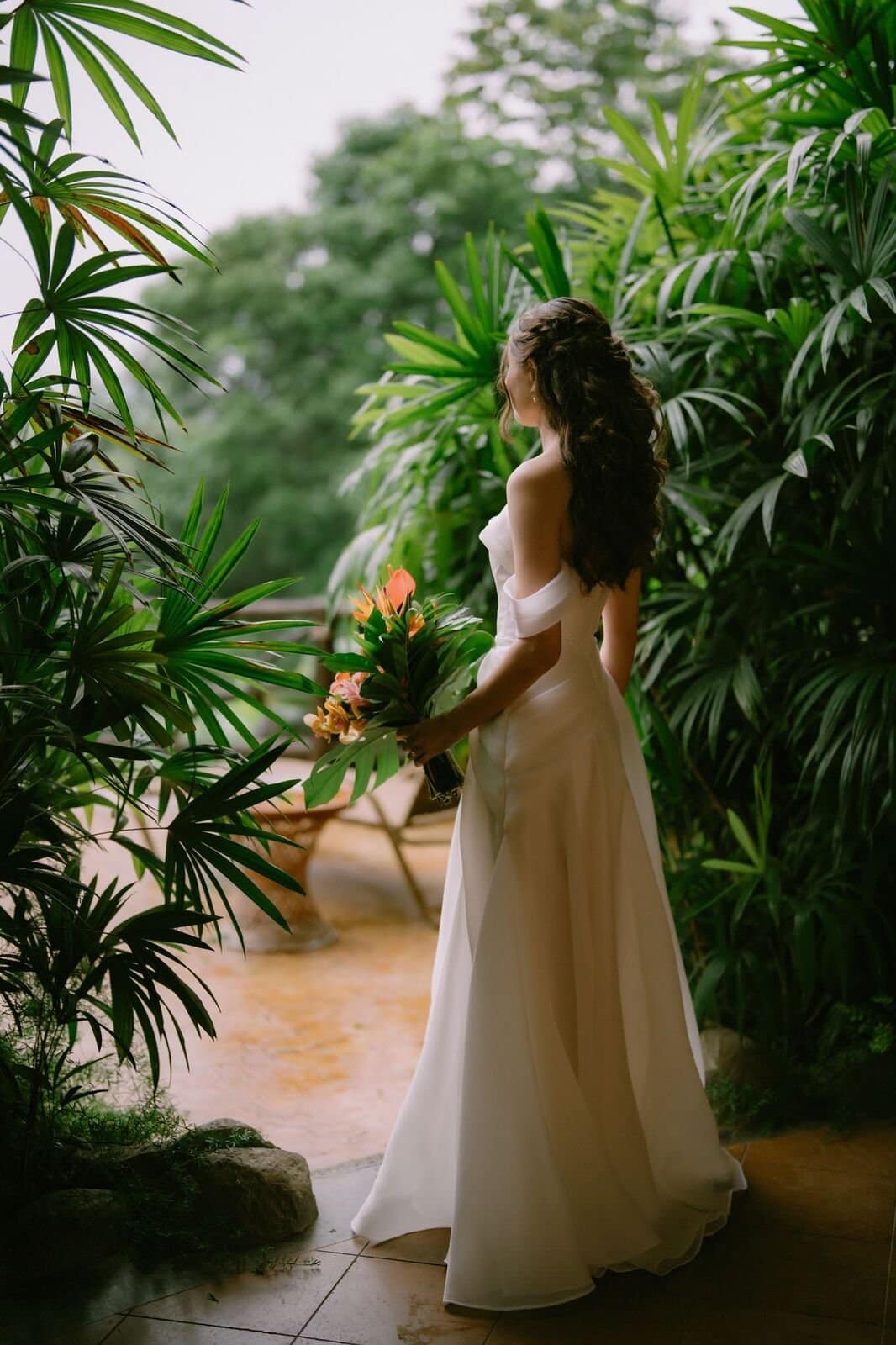
Think volcano views when the clouds allow, rainforest trails, hanging bridges and hot-spring hotels, all within a short drive. It is an easy place to build a full adventure day. It is also a microclimate: light fades early in the green season and rain usually arrives after noon, so we plan ceremonies in the morning or no later than mid-afternoon. If the volcano is hiding, the rainforest still looks incredible.
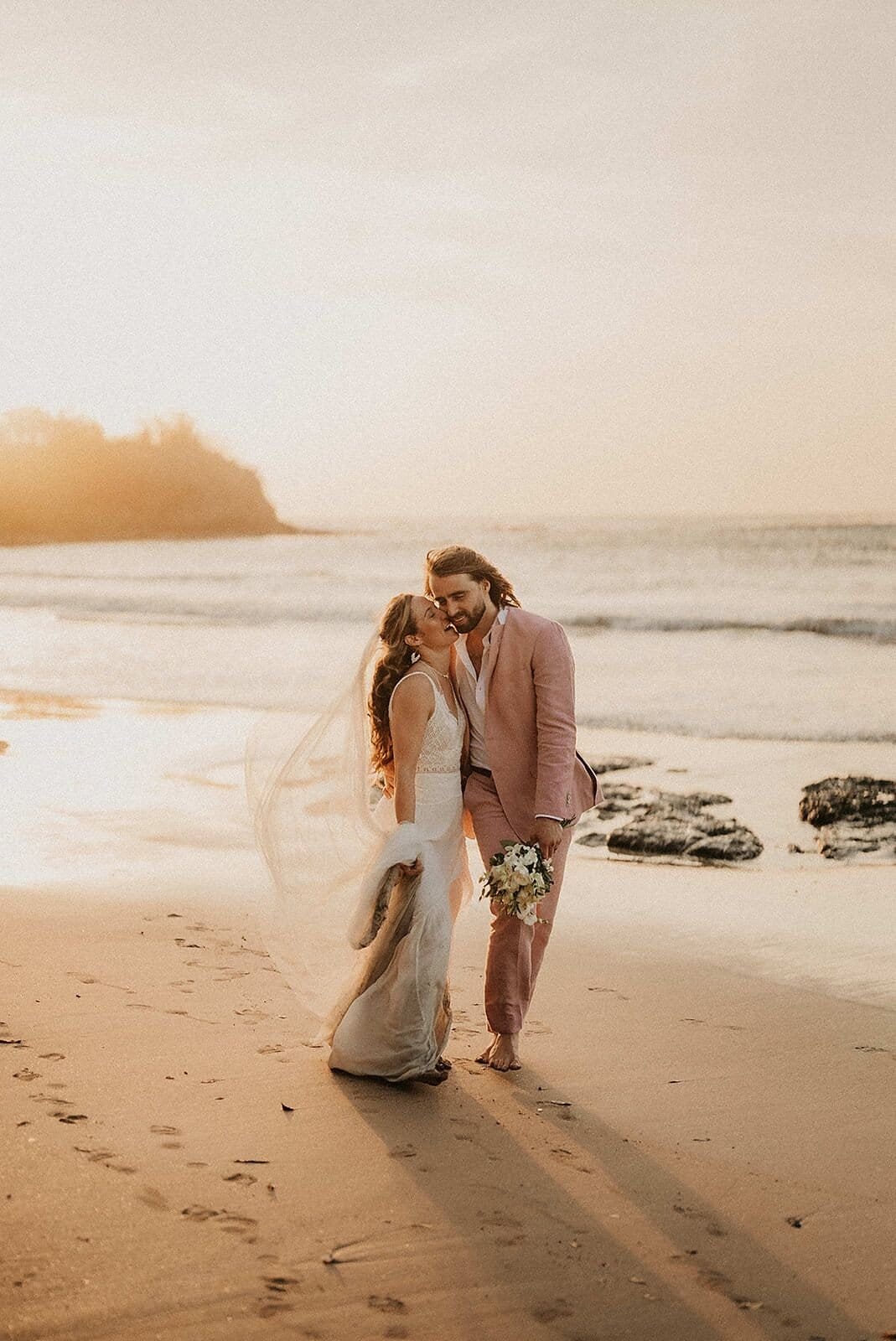
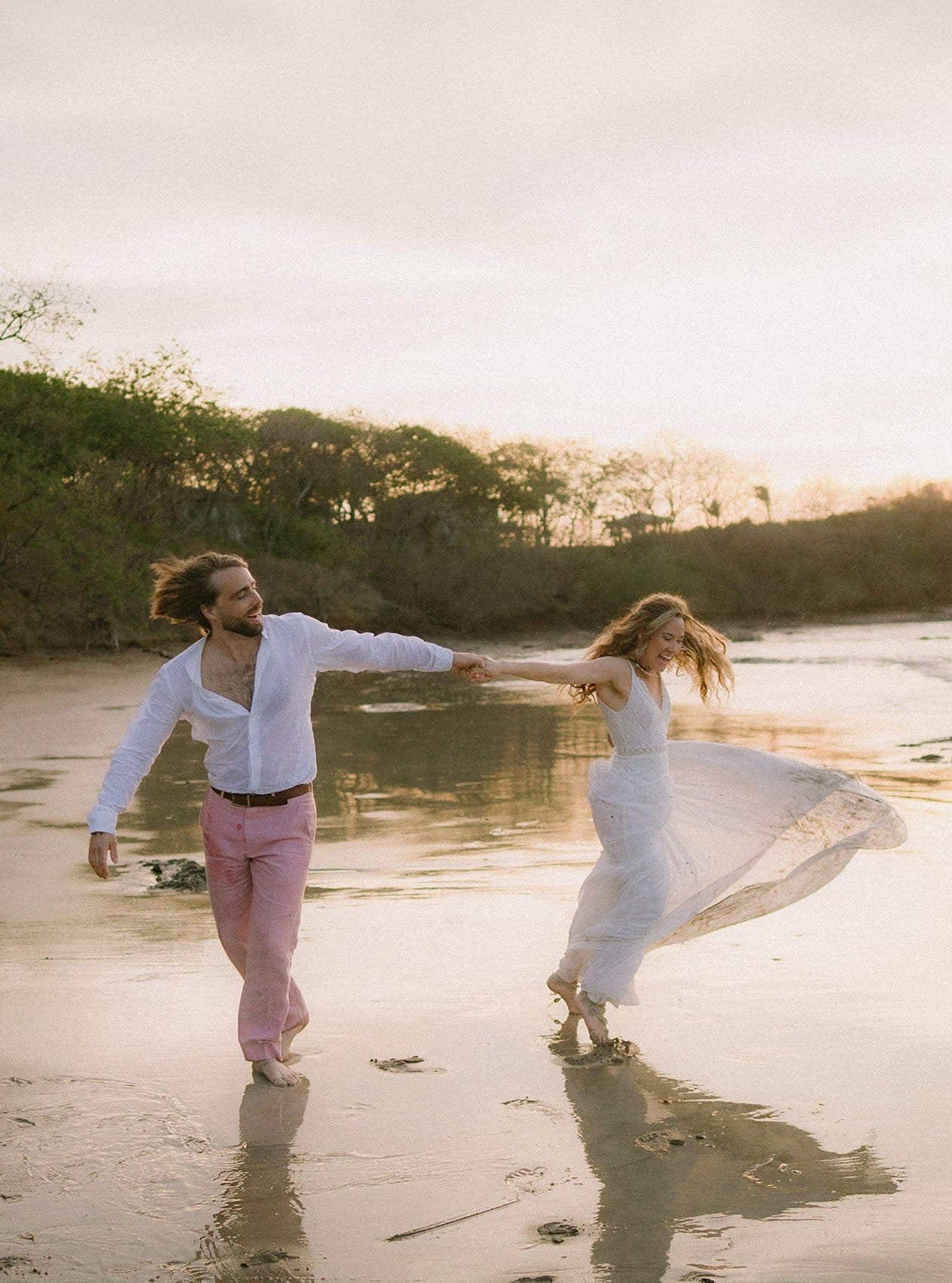
Guanacaste beaches: Tamarindo, Las Catalinas, Conchal
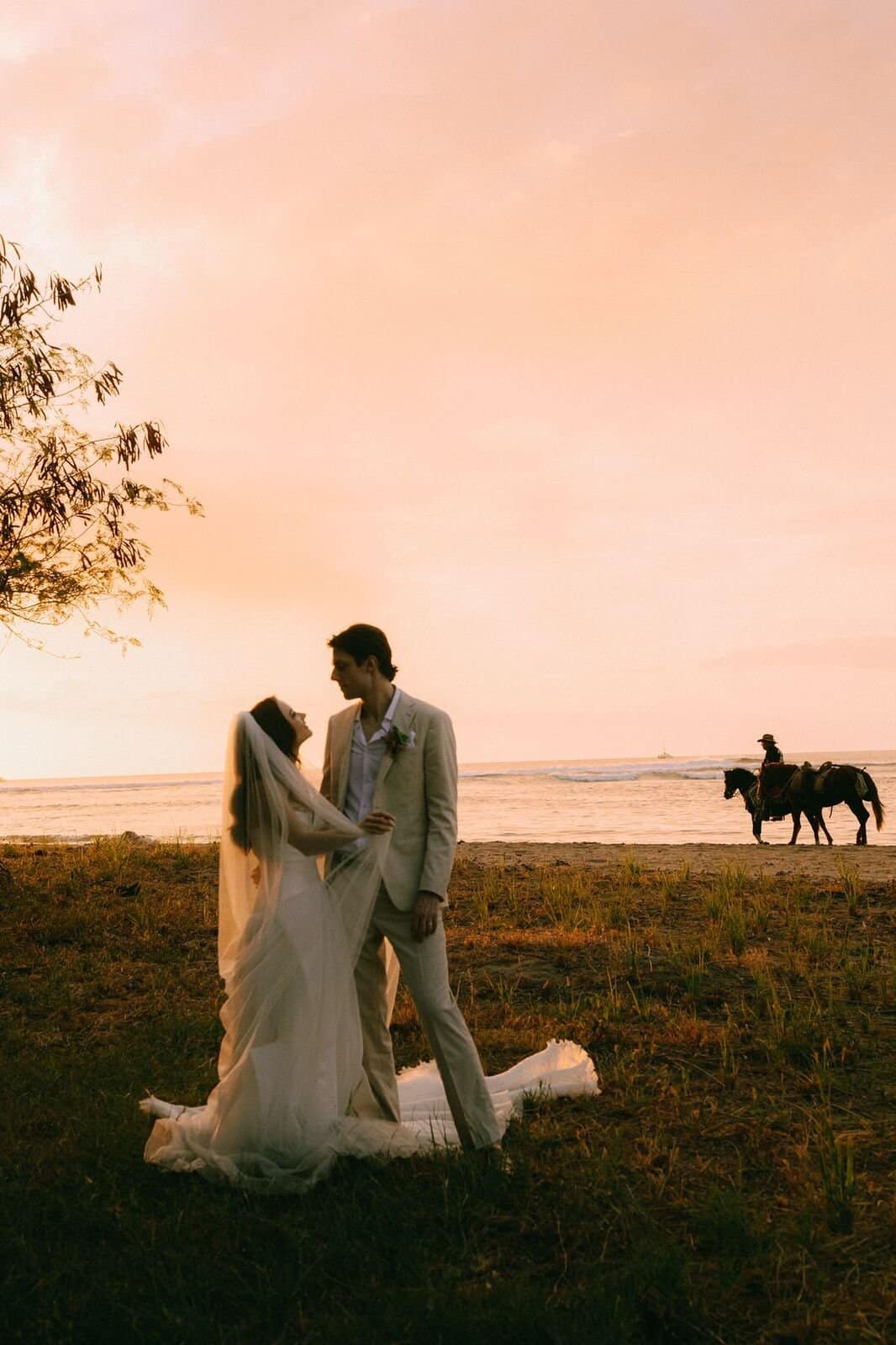
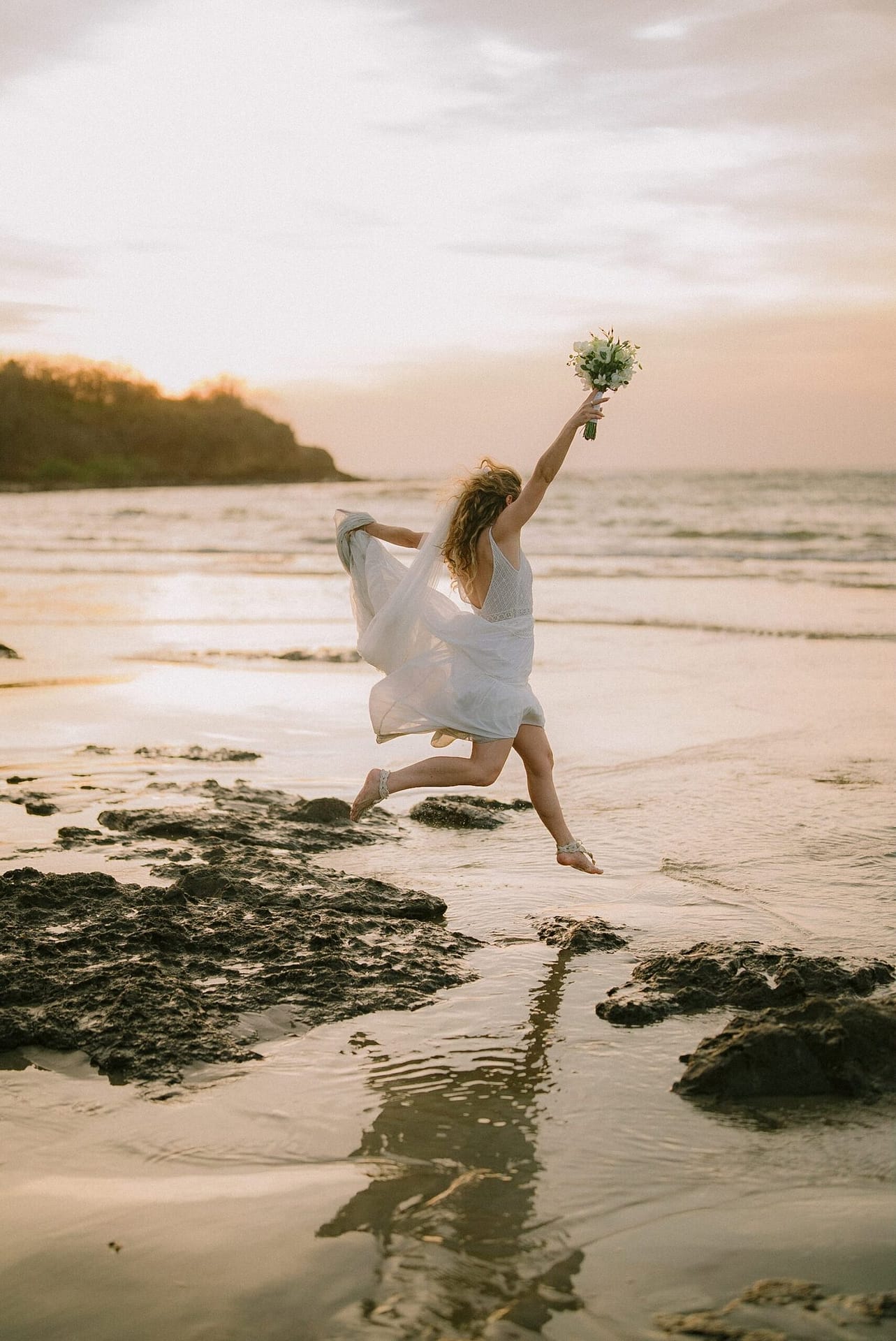
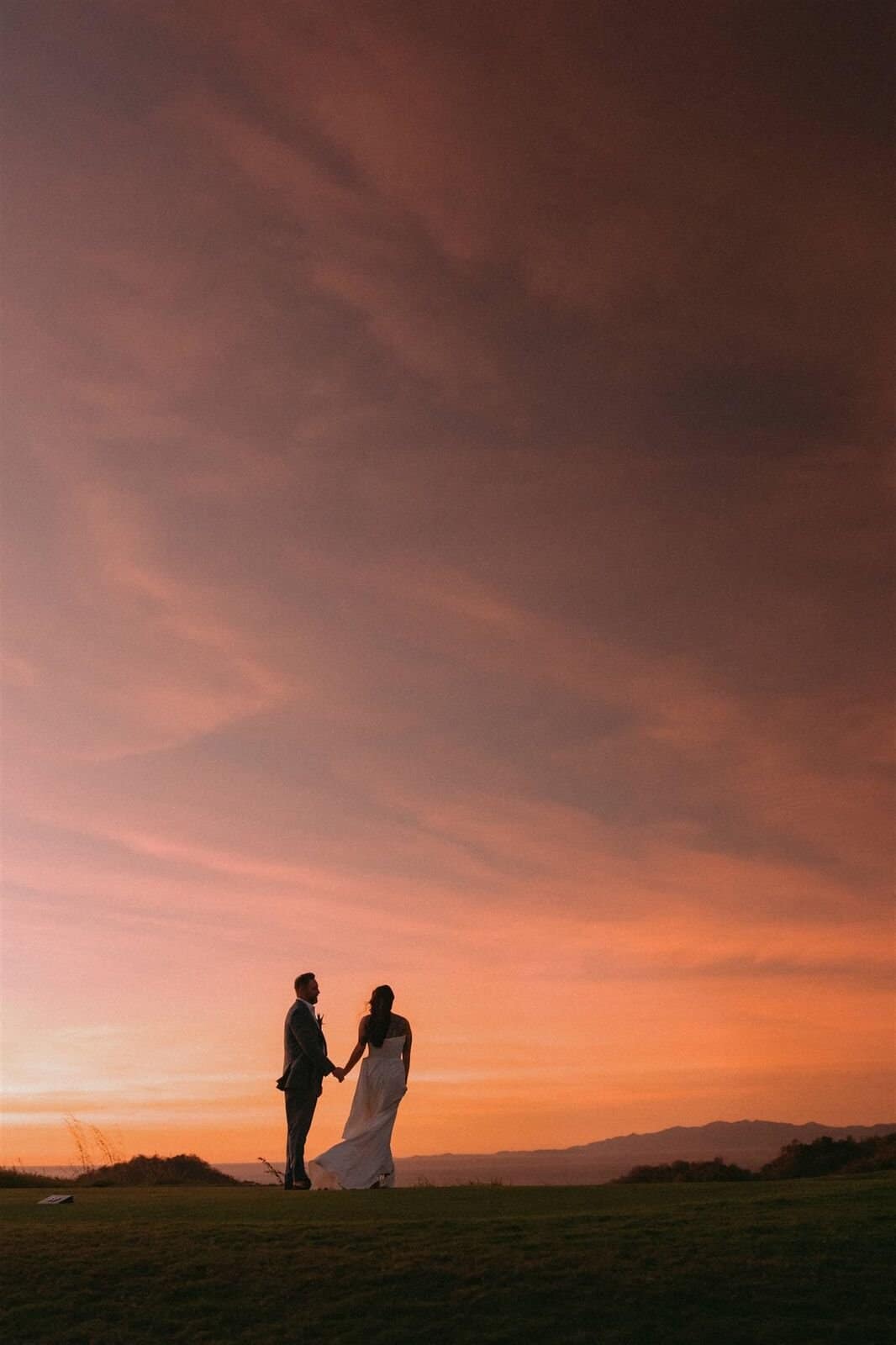
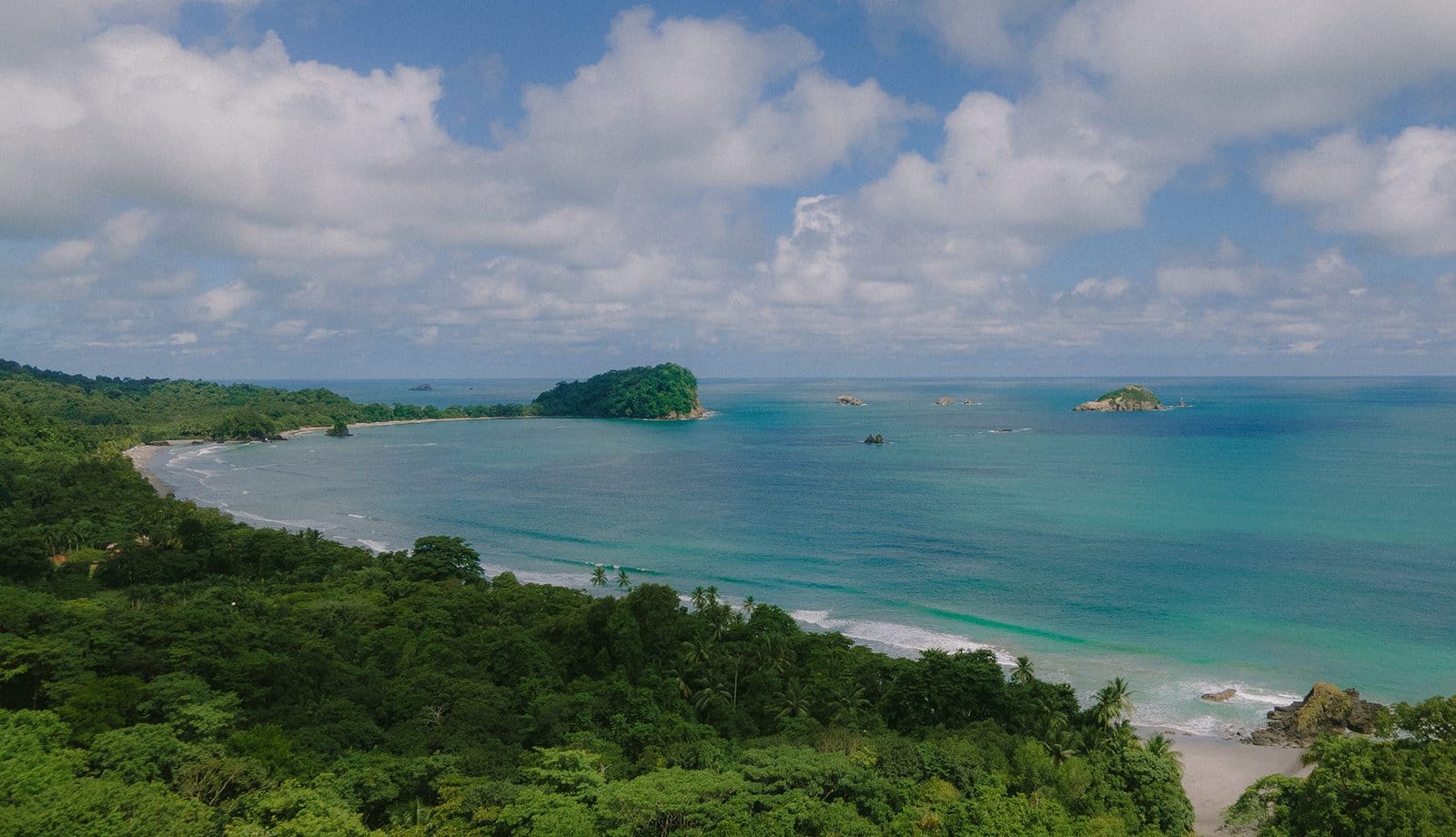
Wide beaches, warm light and the easiest logistics in the country. The best light is very early or right before sunset, and Las Catalinas is a favorite when you want a private, beautiful setting. Our beach ceremonies usually start around 4:00 to 4:30 pm. Here is a beach and jungle spot we love in Tamarindo.
Santa Teresa and Manuel Antonio
Santa Teresa has surf-town energy, big sunsets and unpaved roads, which suits couples who want a relaxed, barefoot day. Manuel Antonio puts beach and jungle in one place, and two hours is plenty for vows and portraits. See our guide to wedding venues in Manuel Antonio. We also have a guide to Santa Teresa wedding venues, with Montezuma and Nosara.
The Caribbean coast
Puerto Viejo and Manzanillo have no ocean sunset, so the light is soft and hazy, with warm light around 3:00 pm. Two days gets you the best of it. The weather works differently from the Pacific side, with drier stretches often from February to April and again in September and October. It is also our favorite place to stay after an elopement: relaxed, great food and less touristy.
Beach or jungle?
Both work; they just look different. If one of you does not like sand, choose a waterfall. If you want it easy, choose the beach. If you cannot decide, split it across two days.
When to elope
The best time to elope in Costa Rica
Costa Rica has a dry season (roughly December to April) and a green season (roughly May to November). The dry season is the easiest: less rain, easier trails and calmer pools. January and February are the busiest months, and the best dates book out first.
February and March are our favorites for waterfall elopements, and April is still dry and lovely. Green season is not a deal-breaker. May and June work with a morning plan, July can be rainy in La Fortuna so keep a hotel backup, and October is the rainiest month on the Pacific side, so start at dawn. November is the start of the dry season and still lush and green.
The rule that never changes: mornings are drier. In the mountains rain is more likely after noon, and mountains make their own weather even in the dry season. One November, a storm the day before a waterfall shoot closed the falls completely. That is why we build schedules that start early and keep a spare window.
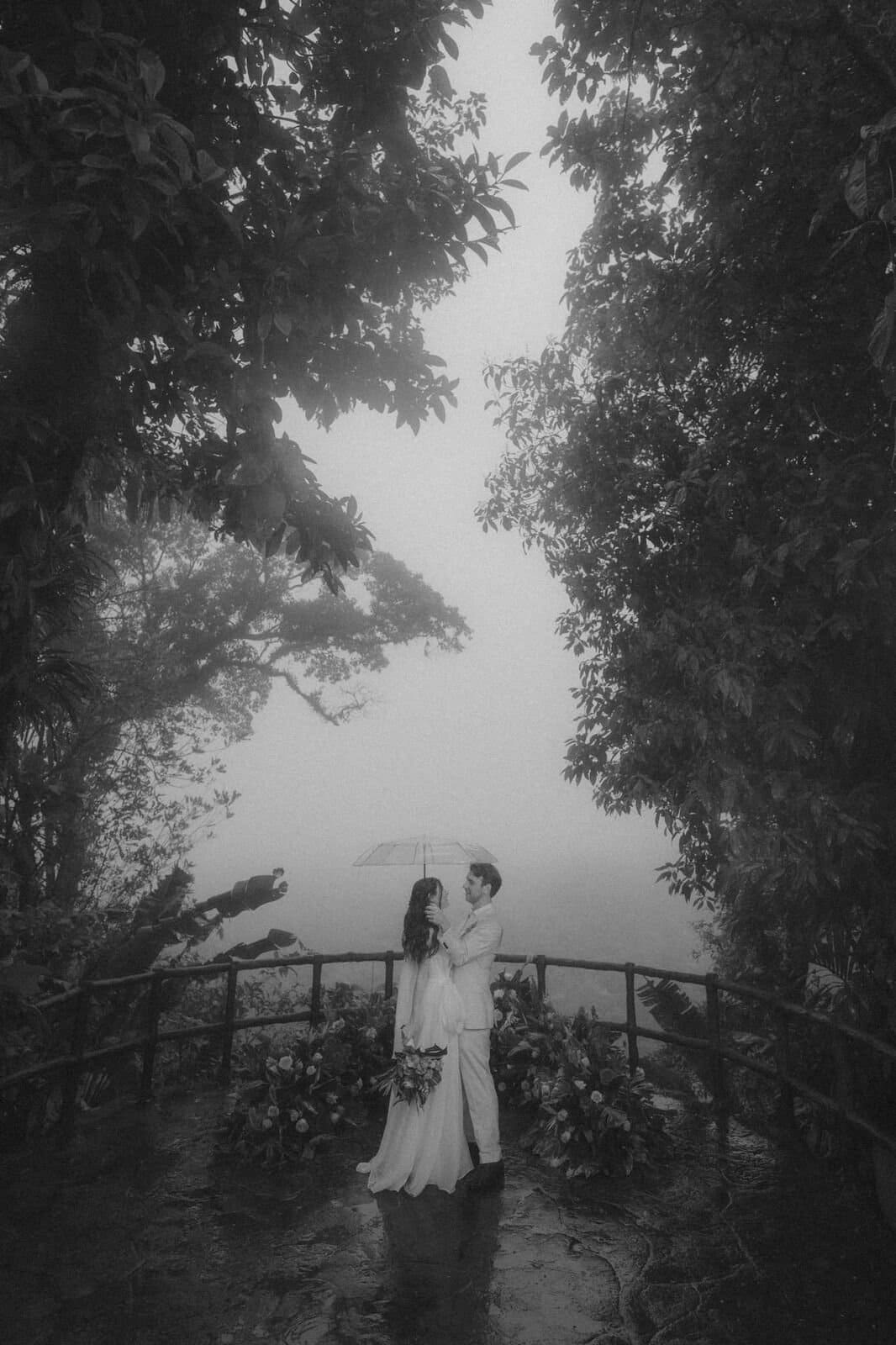
Rain is part of the story. Clear umbrellas photograph beautifully, mud fits the adventurous look, and some of our favorite galleries came from wet days. Have a covered backup, like a villa terrace or a hotel lobby, and do not wait for perfect.


Timing
How to time your elopement day
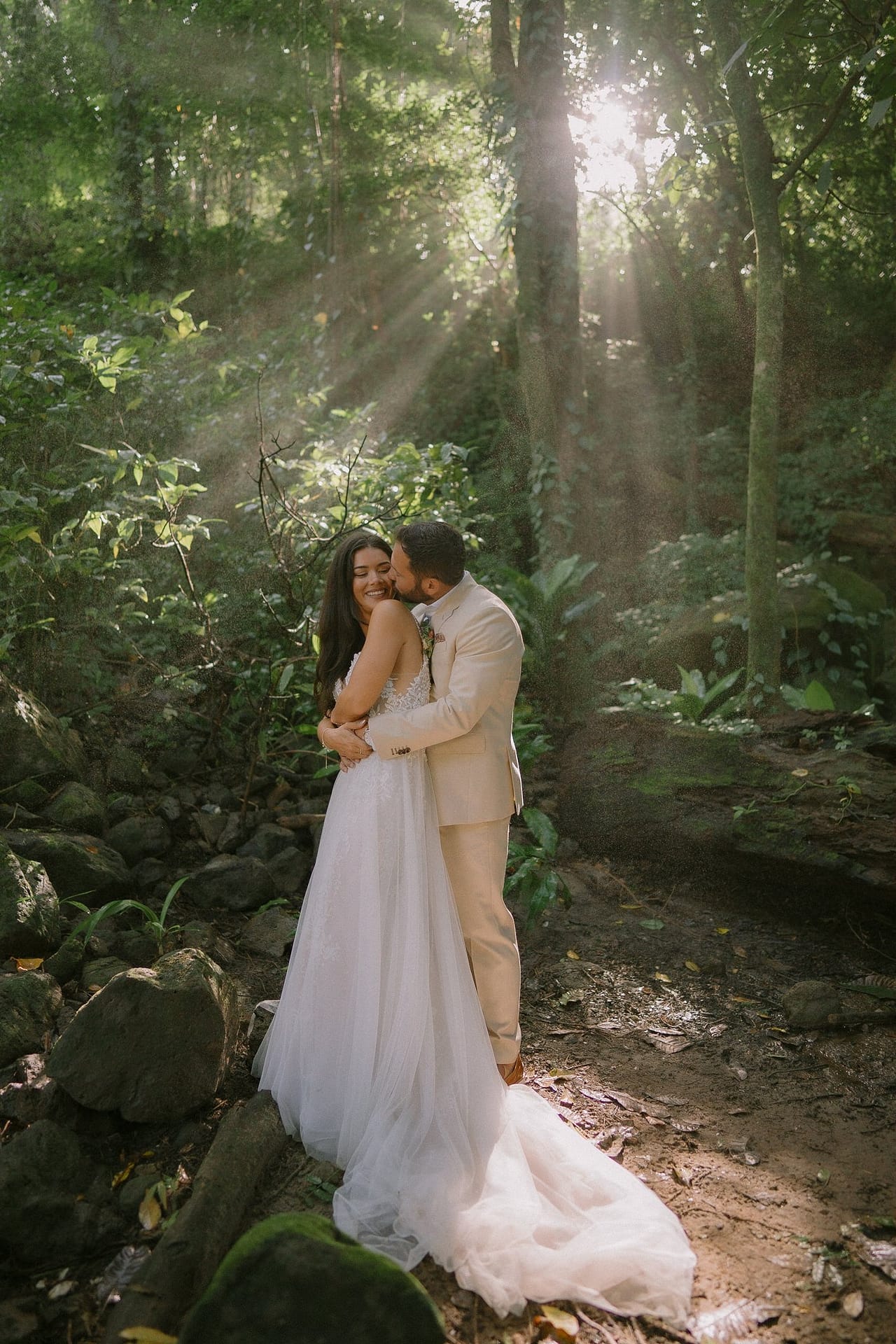
Light decides how your photos feel, so timing matters more than almost anything else. For waterfalls, start early: we like to arrive when the site opens, around 7:00 am, on a weekday, when you can have the place nearly to yourselves. Shoot the dry portraits first, finish at the water, and save the private vows for last so happy tears do not ruin your makeup.
For the beach, ceremonies at 4:00 to 4:30 pm work well. Sunset in Costa Rica is early and changes little through the year, from roughly 5:15 pm in November and December to a little after 6:00 pm in the middle of the year, and the 20 minutes before it are the best light. The most common mistake is a late ceremony that leaves no golden light at all.
Hair and makeup should be finished before we arrive. For a 7:00 am waterfall that can mean a start around 3:00 am if you are staying far away, so choose a natural, loose style that handles humidity and spray.
Three sample days
01.
A waterfall morning
ABOUT 4 HOURS
5:30 getting ready and first look. 7:00 arrive at the falls. 7:00 to 9:00 portraits, dry first and water last. 9:00 to 9:30 private vows, and you are done before the crowds.
02.
A beach at golden hour
ABOUT 3 HOURS
Ceremony around 4:00 to 4:30. A short drive to a quiet beach for portraits as the light softens, and the last 20 minutes before sunset for the photos you will frame.
03.
Two days, two moods
RELAXED AND UNHURRIED
Day one: a slow villa evening around 4:00 pm, hair down and shoes off. Day two: the waterfall at 7:00 am. Different outfits, different light, no rush.
Photo and film
How much photography coverage you need
Two hours can cover vows and portraits in one place. For two people, though, three to four hours is the sweet spot: getting ready, a first look, the location, private vows and a few quiet minutes in between. A little slack beats a tight schedule, so we usually suggest three over two.
Add time if you bring guests (four to five hours for a small group) or if the light is tricky, like La Fortuna in the green season. Elopements with us can be just the two of you or up to about 15 to 20 guests. One day is efficient. Two days is more relaxed and gives you two different moods.
We recommend adding video. Many couples tell us they wish they had, because motion and sound are what bring the day back later. Photo-only is a perfectly good choice too.
Camera-shy? So are most of our couples. We do not pose you; we guide you, with simple prompts and things to do, so you feel guided rather than performing. Elopement photography with us starts at USD 1,640, with all fees and taxes included, and coverage is agreed around your plans and location. See how it works on our Costa Rica elopement photographer page.
The legal part
Is it legal to elope in Costa Rica?
There are two ways to do this, and couples often mix them up. A legal marriage in Costa Rica can go two ways. The civil registry (the Registro Civil) holds ceremonies on weekdays by appointment and, by its own published guidance, takes four to six months on average, so it rarely suits a trip. The usual choice for visiting couples is a Costa Rican notary public, an attorney who can marry you at your location and register the marriage afterward. Either way the paperwork has to be prepared in advance: typically passports, birth certificates and proof of marital status, apostilled and, if they are not in Spanish, officially translated, plus two witnesses. Requirements can change, so check with a Costa Rican attorney, your own consulate or the Registro Civil’s published procedure (in Spanish) before you book anything.
The other option, and the one most of the couples we photograph choose, is a symbolic ceremony. You exchange vows in Costa Rica, led by a friend, a family member, an officiant or just the two of you, and you handle the legal paperwork at home. It is just as meaningful, and much simpler.
We are photographers, not lawyers, so please treat this as orientation, not legal advice. Hotels and chapels also have their own rules, and some resort chapels require a religious ceremony, so ask first.
What to wear
What to wear and bring
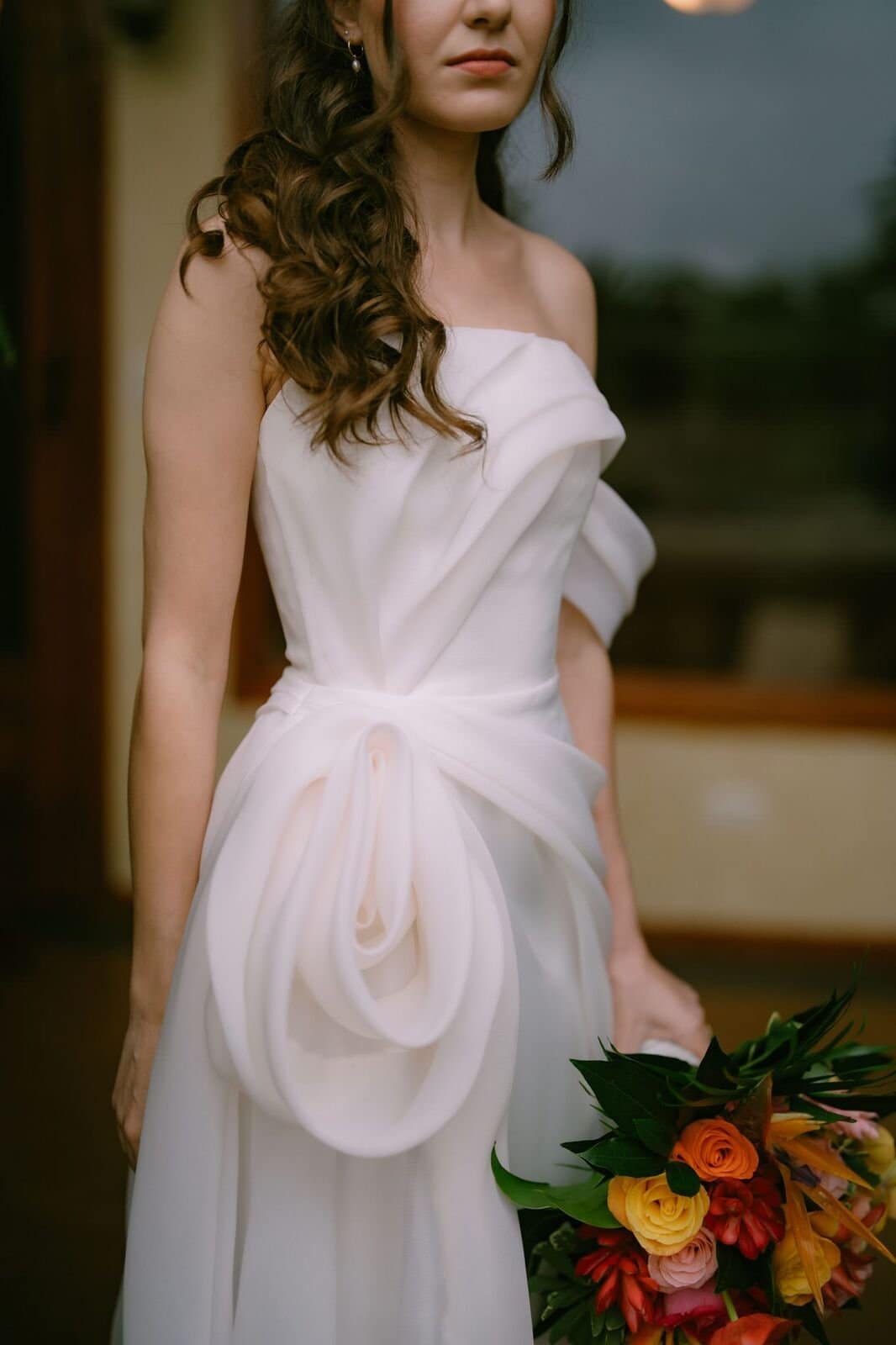
Light and comfortable. Costa Rica is hot and humid, so skip heavy fabrics and think breathable. A dress without a long train is easier on a beach or a trail.
For waterfalls, wear something that can get wet, shoes you can walk in and bring a spare outfit if you plan to swim. Pack extra footwear for mud.
Keep your hair natural and loose, because humidity wins against stiff styles, and choose a hair and makeup artist who knows the heat.
Bring sunscreen, water, a small cake or a bottle of champagne for after the vows, and a relaxing playlist. Write your vows on paper, not your phone. Send us a photo of your outfit early so we can plan the light and locations around it.
Rules and permits
Permits, drones and park rules
Waterfalls, beaches and parks all have their own rules. Some private reserves charge an entrance fee, and at the busiest public waterfalls staff may ask you not to block the falls or move other visitors, which is another reason to go early.
Drones need permission in national parks and protected areas, flying near the Arenal volcano is restricted, and commercial drone use has its own rules. If aerial footage matters to you, tell us early so we can confirm what is possible at your location.
Resorts and hotels may ask for approval for photographers, drones or sparklers, and rules change, so confirm with your venue well before the day. For a wider look at planning, read our guide to having a wedding in Costa Rica.
Good to know
Questions about how to elope in Costa Rica
Can we elope in Costa Rica with just the two of us?
Yes. Most couples who contact us are just the two of them. For a symbolic ceremony you do not need witnesses or guests, and our coverage is built around two people.
How far ahead should we plan?
Peak dates in January and February fill up first. Most couples reach out around five months ahead, though some write only a few weeks before. If your date is close, ask; checking is free.
What if it rains on our elopement day?
Plan for it. Start in the morning, keep a covered backup, bring clear umbrellas, and remember that rain photographs beautifully.
Can we hike to a waterfall in a wedding dress?
Usually yes, with the right choices: a dress that can get wet and has no long train, shoes you can walk in and a change of clothes for after. Tell us the location and we will tell you what to expect.
Do you travel across Costa Rica?
Yes. We photograph elopements and weddings in Tamarindo, Santa Teresa, Las Catalinas, La Fortuna, Uvita and beyond.
Ready to elope in Costa Rica? Tell us your date and the place you are dreaming about.